

School GISHK
- Posted on
- No Comments
- Blog
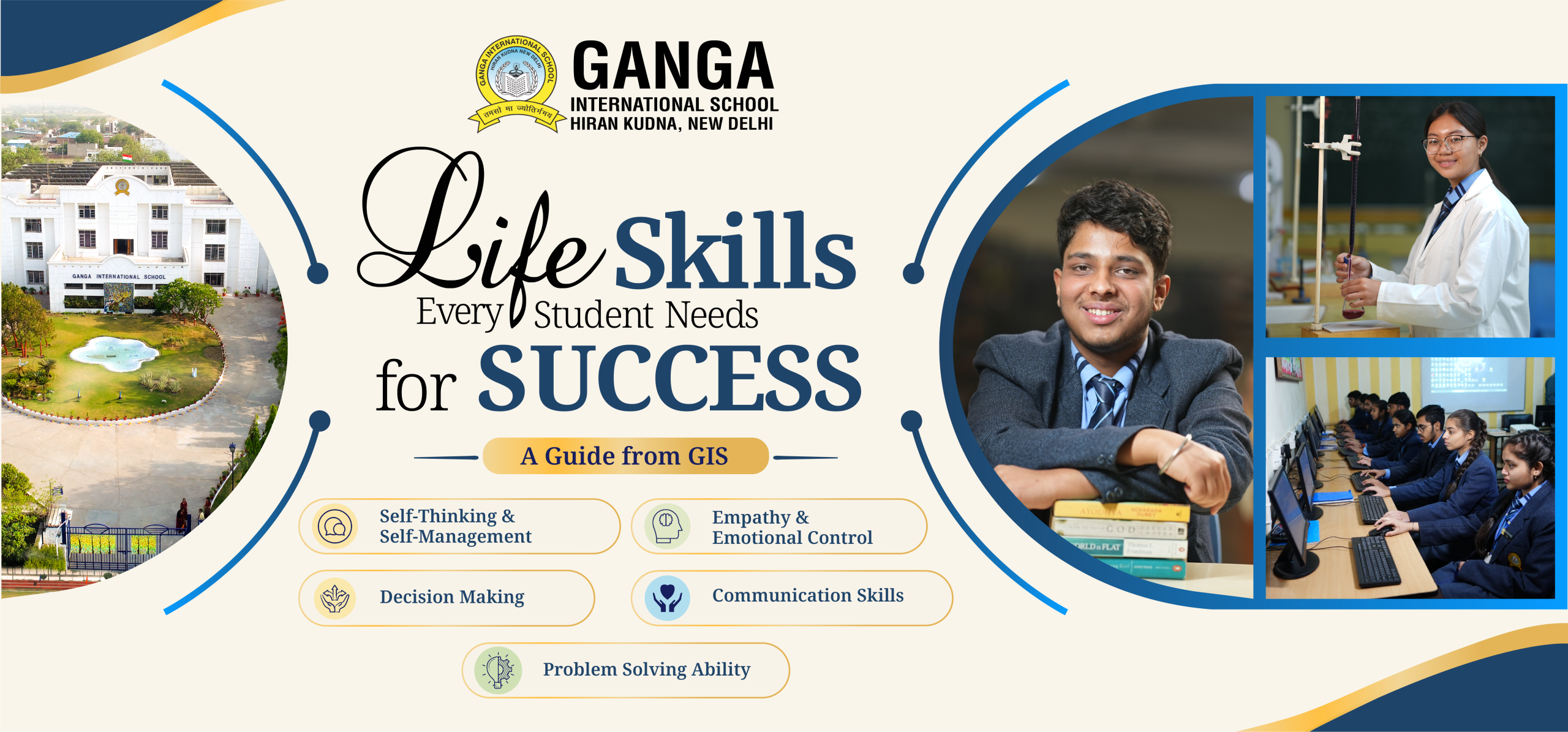
Life Skills Every Student Needs for Success: A Guide from GIS
Education is an essential part of a student’s journey towards reaching the higher goal in life. To get through the challenges and reaching the desired benchmark needs both skills in academics and extra-curricular activities. GIS, HIRAN KUDNA , a residential cum day school with its huge campus strives to impart the facilities and the support system based on modern technology such as Robotics lab , smart-boards with wi-fi connectivity, conference rooms with projectors and AC classrooms that helps in conducting the classes smoothly. The school aims to work on a holistic approach through the implementation of extra-curricular activities pertaining to sports and swimming. Special focus lies on building communication skills and confidence.
The school follows a strict discipline in the classrooms and sports fields under CCTV surveillance. The students are trained for playing badminton, basketball, football, volleyball and cricket. The selected students further represent the school at different levels of championship. Thus, the boarding school provides ample scope for the learners in both academics and co-curricular activities. Moreover, our newly launched NDA PROGRAMME caters to needs of the NDA aspirants. Our competitive faculty, mentors and coaches work together to bring the best potential of all learners equipped to face the professional world. Thus, pyramid of learning interwoven with life skills flows from the Junior stage to the senior level which enables the students to embrace success. A student embarks on the learning pedestal through the following life skills :-
Self Thinking & Self Management
A student is a dreamer, creator and reflector. He/ She needs opportunities to ponder over the surroundings and become self manager in the second home. Here, through observations and contemplations, he/she grows as a thinker and gains the ability to manage his time-table of learning and playing. Arranging the cupboards, going to the mess on time and taking the classes regularly and reaching the evening slots enhances his/her time-management skills.
Empathy & Emotional Control
A student feels connected with the school and longs to build healthy relationship with the peers. A child overcomes the homesickness and further steps to stay connected in the second home where he/she enjoys the outings, tours and trips along with the other boarding students and learn adaptability. The celebration of festivals and important days with in the campus brings them more close to each other and understand the values that the festivals aims to teach.
Decision Making
A student takes his/her decision to live in the boarding home, controls his/her emotions and gets engaged for the entire day in a plethora of activities. Thus his competence and intellectual acumen is built strong enough to take decisions in future life. Choosing the optional subjects at the senior secondary level shows his/ability of decision making that matches his/her future goals. A healthy school environment fulfils his career-choice. Moreover, the school organises workshops to provide additional support to the learners.
Communication Skills
Our school targets to enrich confidence and expression of each student, so that when they step out from school life, they are good speakers and much talented. Special activities in the form of role-play, debate and extempore are taken where the students speak without hesitation. Moreover, the dance and music skills get their expression when the students grab the opportunity to show their talent. Thus, students learn to balance their learning pace in both academics and extra-curricular activities.
Problem Solving Ability
A school is more than a learning temple. A student learns from the behaviour of other students and is influenced to follow discipline, punctuality and is motivated to be self-regulated. Thus, all the problems & challenges that act as barriers towards learning are minimized and he /she is not distracted towards the outer forces. Rather he/she finds a solution within self. In this way, the task of the parents, teachers and the mentor to develop the problem solving ability is met during the process of his/her involvement into various activities that further shapes the personality of any student.


